Understanding Maa Baglamukhi’s Traditional Iconography: Symbols, Appearance and Religious Meaning
By Acharya Deepak Guru | Sarva Siddh Peeth, Nalkheda (M.P.)
Introduction
Maa Baglamukhi holds an important place in Hindu Shakti tradition and is worshipped as one of the ten Mahavidyas. Her traditional depictions carry various symbolic elements that represent different aspects of divine power, devotion, and spiritual understanding.
The appearance of Maa Baglamukhi is distinctive in Hindu religious art and iconography. Her yellow attire, divine posture, and traditional representations have special significance in devotional traditions.
Understanding these symbols helps devotees learn more about the religious and cultural traditions associated with Maa Baglamukhi.
1. The Traditional Appearance of Maa Baglamukhi
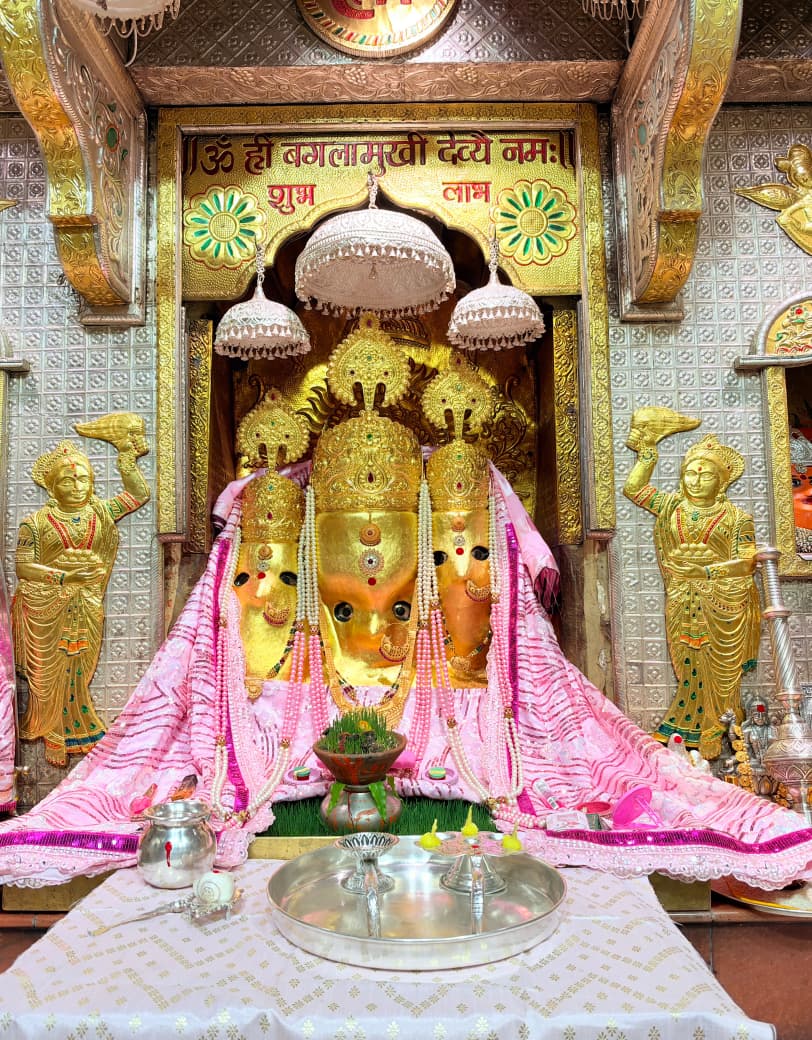
Maa Baglamukhi is traditionally depicted wearing yellow clothes and ornaments. Her divine appearance is associated with the colour yellow, which holds an important place in her worship.
In traditional religious artwork, she is often represented seated on a throne or lotus. These depictions reflect the artistic and devotional traditions associated with the Mahavidyas.
Different temples, paintings, and religious illustrations may present her appearance in different ways.
2. Significance of Yellow Colour
Yellow is one of the most recognisable elements associated with Maa Baglamukhi.
In Hindu traditions, yellow is commonly associated with knowledge, auspiciousness, devotion, and spiritual practices.
Devotees often use yellow flowers, clothing, and other traditional offerings during Maa Baglamukhi worship. These practices reflect the importance of yellow in her devotional tradition.
3. Symbolism of Maa Baglamukhi’s Divine Posture
Traditional depictions of Maa Baglamukhi often show her holding symbolic objects and displaying a distinctive divine posture.
These representations are understood through religious traditions and are associated with the concept of controlling negative speech and harmful intentions.
Her iconography is an important part of understanding her place among the ten Mahavidyas.
4. Maa Baglamukhi and the Symbolism of the Gada
In traditional representations, Maa Baglamukhi is sometimes shown holding a gada (mace).
The gada is a recognised symbol in Hindu religious iconography and is commonly associated with strength, authority, and divine power.
Its presence in Maa Baglamukhi’s traditional depiction forms part of the symbolic language used in Shakti worship.
5. Maa Baglamukhi’s Place in Shakti Tradition
Maa Baglamukhi is one of the ten Mahavidyas, a group of ten forms of the Divine Mother in Hindu Shaktism.
Each Mahavidya has a distinct identity, traditional representation, and place in religious literature.
Maa Baglamukhi is particularly associated with the concept of Stambhana in traditional religious understanding. Her worship and iconography form an important part of the broader Mahavidya tradition.
6. Religious Artwork and Devotional Representation
Images and idols of Maa Baglamukhi are found in temples, religious books, paintings, and devotional spaces.
These representations may differ in artistic style and presentation, but they generally preserve important traditional elements associated with the Goddess.
Such artwork also reflects the cultural importance of Shakti worship across different regions of India.
7. Devotion to Maa Baglamukhi
Devotees worship Maa Baglamukhi with faith and devotion through traditional prayers, puja, and other religious practices.
Her worship is connected with the broader traditions of Hindu Shaktism and the ten Mahavidyas.
Learning about her traditional appearance and symbolic elements provides a deeper understanding of the religious traditions associated with Maa Baglamukhi.
Conclusion
Maa Baglamukhi’s traditional iconography represents an important part of Hindu Shakti tradition. Her yellow attire, divine posture, and symbolic objects have distinctive religious and cultural meanings.
Understanding these elements allows devotees and readers to learn more about Maa Baglamukhi’s identity and her place among the ten Mahavidyas.
For more information about Maa Baglamukhi and her worship traditions, visit Online Maa Baglamukhi Havan.
Maa Baglamukhi Havan Services
Talk to Acharya Deepak Guru and enquire about havan and puja arrangements.
Call: +91 62326 53736Visit WebsiteYe bhi padhein: 36,000 aur 1,25,000 Jaap Anushthan mein antar | Online Baglamukhi Puja ghar baithe