Maa Baglamukhi Peetambara and Nalkheda Temple: Significance of Yellow, Daily Worship and Traditions
By Acharya Deepak Guru | Sarva Siddh Peeth, Nalkheda (M.P.)
Introduction
Maa Baglamukhi is one of the ten Mahavidyas in the Shakta tradition of Hinduism. She is also known as Maa Peetambara, a name traditionally associated with the colour yellow.
Maa Baglamukhi Temple in Nalkheda, located in Agar Malwa district of Madhya Pradesh, is an important religious place dedicated to her. Devotees visit the temple to offer prayers, participate in religious ceremonies and spend time in devotion.
For more information about Maa Baglamukhi and her religious significance, visit Online Maa Baglamukhi Havan.
Why Is Maa Baglamukhi Known as Peetambara?
Maa Baglamukhi is traditionally known as Peetambara because of her association with yellow-coloured garments in religious descriptions and traditional representations.
The Sanskrit word Peetambara is formed from two words:
- Peeta: Meaning yellow.
- Ambara: Meaning clothing or garments.
Together, the word Peetambara refers to someone adorned in yellow garments. This name is closely connected with the traditional visual identity of Maa Baglamukhi and is widely used in devotional literature and cultural references.
Significance of Yellow Colour in Indian Tradition
Yellow has a special place in Indian cultural traditions and is commonly associated with different symbolic meanings. Some of its widely recognised cultural associations include:
| Association | Significance |
|---|---|
| Auspiciousness | Yellow is frequently seen in traditional clothing and decorations during important cultural occasions. |
| Knowledge and Learning | In certain Indian cultural traditions, yellow is associated with wisdom and education. |
| Cultural Heritage | Yellow has a visible presence in traditional Indian art, textiles and historical representations. |
| Symbolism | The colour is used in various artistic and cultural expressions across different communities. |
The meaning and significance of yellow may vary across regions, communities and cultural traditions.
Yellow in Maa Baglamukhi’s Traditional Representation
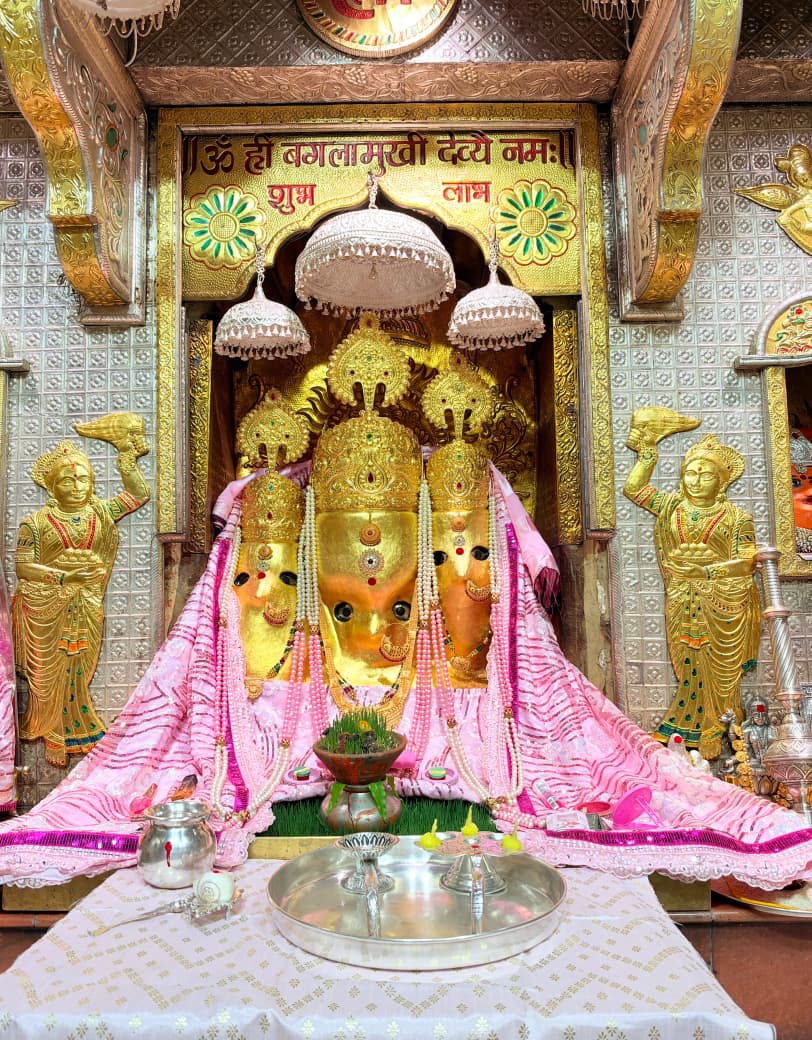
Yellow is an important visual feature in traditional representations of Maa Baglamukhi. She is commonly depicted wearing yellow garments and adorned with traditional ornaments. This distinctive appearance is closely associated with her identity as Peetambara.
The colour can also be observed in paintings, sculptures, temple artwork and other traditional visual representations of the Goddess. Different artists and regional traditions may present variations in artistic details while maintaining the familiar visual identity associated with Maa Baglamukhi.
Maa Baglamukhi’s Representation in Hindu Iconography
Hindu iconography includes various traditional representations of deities, each with distinctive visual elements and symbolic features. Maa Baglamukhi holds a recognised place among these representations as one of the ten Mahavidyas.
Her traditional appearance is characterised by yellow garments, ornaments and specific symbolic elements described in religious and artistic literature. These visual representations form part of India’s rich artistic and cultural heritage and can be seen in paintings, sculptures and temple illustrations.
Maa Baglamukhi and the Ten Mahavidyas
The ten Mahavidyas are an important group of Goddess forms in the Shakta tradition of Hinduism. Maa Baglamukhi is recognised as one of these ten forms, and each Mahavidya has a distinct identity and traditional representation within this group.
The Mahavidyas are an important part of Hindu religious literature, cultural heritage and artistic traditions. Maa Baglamukhi’s association with yellow and her identity as Peetambara distinguish her visual representation within the group.
Daily Worship at Maa Baglamukhi Temple Nalkheda
Daily worship is an important part of temple traditions. Like other Hindu temples, worship at Maa Baglamukhi Temple is associated with prayers, devotional offerings and religious practices.
Devotees visiting the temple may participate in prayers and offer their respects to Maa Baglamukhi according to the temple’s established customs. The daily worship environment reflects the faith and devotion of visitors who come to seek the blessings of the Goddess.
Morning Worship and Prayers
Morning worship holds a special place in Hindu temple traditions. Devotees often begin their day with prayers and remembrance of the deity.
At Maa Baglamukhi Temple, visitors may offer flowers, traditional पूजा सामग्री and prayers according to the temple’s customs. Morning visits also provide devotees with an opportunity to spend peaceful time in the temple and participate in devotional activities.
Aarti and Its Religious Significance
Aarti is an important devotional practice in Hindu worship. It is performed using a lit lamp while devotional prayers are offered to the deity.
In the worship of Maa Baglamukhi, aarti is a way for devotees to express their respect, faith and devotion. Devotional singing and prayer are also important parts of the religious atmosphere associated with temple worship.
Havan and Traditional Worship Practices
Havan is a traditional Hindu religious ceremony in which offerings are made into a sacred fire while Vedic mantras and prayers are recited.
Maa Baglamukhi worship is traditionally associated with special havan ceremonies. These rituals are performed according to religious customs and under the guidance of knowledgeable priests. Devotees interested in participating in a havan can enquire about the available arrangements and procedures at the temple.
Importance of Yellow Colour in Maa Baglamukhi Worship
Yellow is traditionally associated with Maa Baglamukhi. In her worship, yellow flowers, yellow cloth and other yellow-coloured offerings are commonly used. This colour holds religious and symbolic significance in the traditions associated with her.
Devotees often include yellow-coloured items in their पूजा सामग्री as part of their devotional practices.
Religious Traditions Followed by Devotees
Devotees visiting Maa Baglamukhi Temple follow different traditional practices according to their faith and personal beliefs. Some commonly observed devotional practices include:
- Offering flowers and prayers to Maa Baglamukhi.
- Participating in aarti and devotional activities.
- Reciting prayers and traditional mantras.
- Following the guidance of temple priests during religious ceremonies.
- Maintaining cleanliness and discipline within the temple premises.
These practices are part of the broader religious customs followed in Hindu temples.
Temple Etiquette and Things to Keep in Mind
Visitors should respect the religious environment and follow the temple’s guidelines during their visit. Some basic points to remember include:
- Maintain cleanliness inside the temple premises.
- Follow the instructions provided by temple authorities.
- Respect other devotees and their religious practices.
- Ask permission before taking photographs where required.
- Use appropriate and respectful language within the temple.
- Follow the guidance of priests during special ceremonies.
These simple practices help maintain a respectful environment for everyone visiting the temple.
Conclusion
Maa Baglamukhi’s identity as Peetambara reflects the significance of yellow in her traditional representation and cultural identity. The meaning of the name Peetambara, along with the Goddess’s distinctive appearance in traditional artwork, highlights the connection between colour symbolism and Indian cultural heritage.
Maa Baglamukhi Temple Nalkheda represents an important part of the religious and cultural traditions of Madhya Pradesh. Daily prayers, aarti, havan and devotional offerings are among the practices associated with her worship, and understanding these customs helps visitors learn more about the spiritual practices and cultural heritage of the temple.
Maa Baglamukhi Havan Services
Talk to Acharya Deepak Guru and enquire about puja, mantra chanting, Jaap Anushthan and havan arrangements.
Call: +91 62326 53736Visit Website